The Sacred Within

Spiritual Significance

দেবী দর্শন
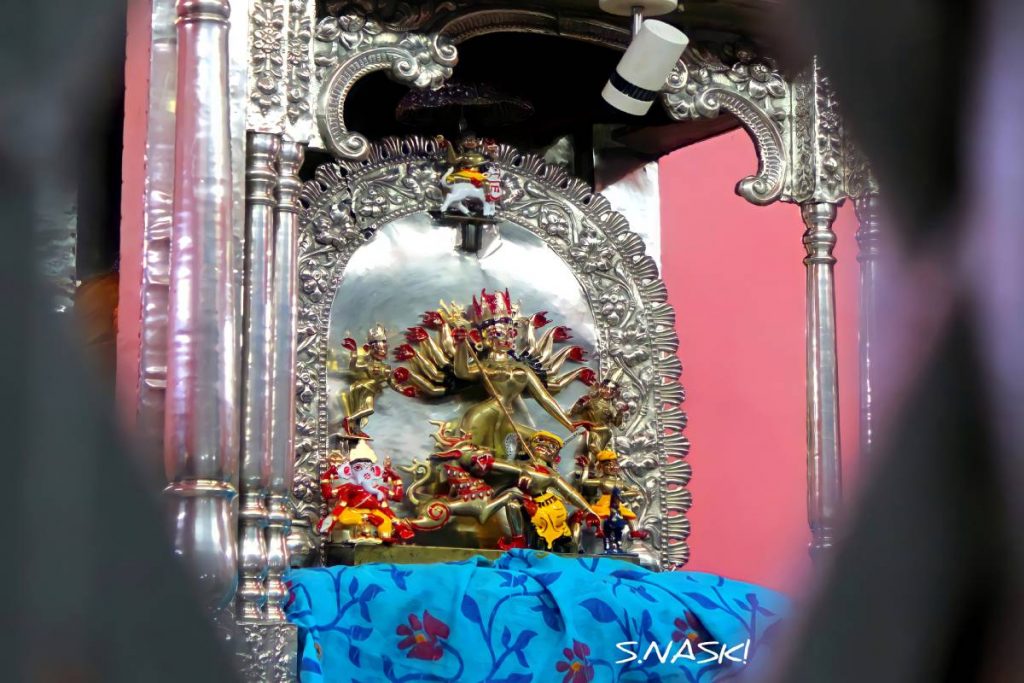
Sacred idol of Goddess Dhakeshwari
The Divine Mother

Devi Dhakeshwari — Goddess of Dhaka

Dhakeshwari is the personification of the supreme feminine — Shakti, the cosmic energy without which the universe cannot move. She is the protector, the giver, the destroyer of evil, the keeper of dharma. To her devotees she is simply Ma — the Mother.

Iconographically, the Goddess is enshrined as a serene yet sovereign manifestation, attended by sacred motifs: the lotus of purity, the lion of fearlessness, and the mukut of regality. In her presence, the worshipper is invited not to plead, but to remember — that the divine and the human are bound by an inseparable thread.

Across centuries, she has been invoked as Adi Shakti, Durga, Kali, and Bhagavati — yet here in Dhaka she carries a singular intimacy: the Goddess of this city, this people, this soil.
Shakti Worship

The Feminine Divine in Bengal

Bengal's spiritual identity is woven through the worship of the Mother Goddess — and Dhakeshwari is its luminous Bangladeshi axis.

Adi Shakti

The Goddess as primordial energy from whom creation, preservation, and dissolution all flow — beyond name, beyond form.

Devi as Protector

The fierce, all-conquering aspect — Mahishasura-Mardini — invoked to destroy fear, ego, and the unrighteous within and without.

Mother of Bengal

For the Bengali soul, the Goddess is family — addressed as Ma, welcomed home each Durga Puja, mourned at the immersion.

Daily Devotion

The Sacred Hours of the Temple

From the first lamp at dawn to the closing aarti at dusk, the temple breathes in time with eternity.

i.

Morning Mangala Aarti

Before the city stirs, the doors of the sanctum are opened. Brass lamps are lit; conch-shells call the Goddess to her seat; the day begins with a hush of incense.

ii.

Bhog Offering

Sanctified food — rice, sweets, fruits — is offered to the Devi at midday. After her grace, the offerings are distributed to devotees as prasad.

iii.

Sandhya Aarti

At dusk the temple's lamps are once again raised — five-flamed panchpradip, swung in slow arcs, accompanied by bells, drums, and kirtan.

iv.

Chanting & Mantras

The Devi Suktam, Chandipath and ancestral hymns sustain a continuous current of devotion through the temple precincts.

v.

Special Pujas

Devotees offer Sankalpa Pujas for blessings, ancestors, weddings, naming rites, healing and gratitude — performed by resident priests.

vi.

Night Sealing

At late evening, the sanctum is gently closed — but the lamp before the Goddess never goes dark. The temple sleeps in her unbroken light.

Sacred Calendar

Festivals of Devotion

Each festival is a deeper encounter with the Mother — a national pilgrimage of joy, grief, and grace.

Autumn · Sharad

Durga Puja

The largest annual celebration of the Mother Goddess in Bangladesh. Five days of resplendent worship, cultural performance, and national witness — attended by Heads of State and devotees from across South Asia.

Late Autumn

Kali Puja & Diwali

The fierce form of the Mother is invoked on the new-moon night. Lamps line every courtyard; the temple becomes a constellation of devotion against the dark.

Spring

Saraswati Puja

The Goddess of learning and the arts is invoked. Children offer their first letters at her feet; musicians offer their first ragas; the temple becomes a school of grace.

Phalgun · Spring

Maha Shivaratri

The night-long vigil for Lord Shiva, observed at the four miniature Shiva shrines flanking the courtyard — a continuum of bell, lamp, and silence until dawn.

Bhadra

Janmashtami

Krishna's midnight birth is celebrated with cradle-rocking, devotional song, and the recitation of the Bhagavata — a lyrical festival of love.

Kartik

Lakshmi Puja

The Goddess of fortune and abundance is welcomed into homes and courtyards — a festival of prosperity, gratitude, and quiet domestic joy.

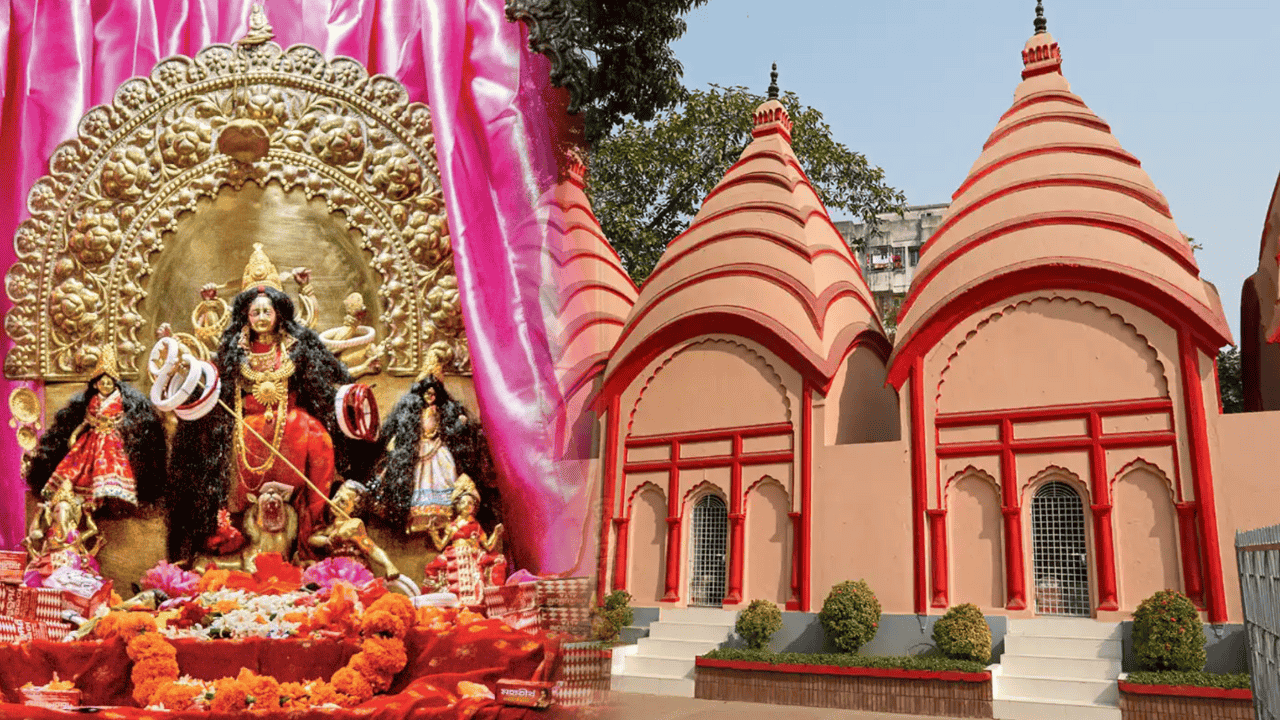
Dhakeshwari Temple — divine symbolism in urban heart
In the City's Heart

The Divine Mother in urban life

In a metropolis of more than twenty million, where the rhythms of commerce and traffic seem ceaseless, Dhakeshwari is a slowing-down — an interruption of the urban tempo by the rhythm of the eternal.

To enter the temple precinct is to step out of historical time and into liturgical time: the time of the Goddess. Lamp, bell, mantra, breath. The city beyond the walls dissolves into the murmur of the sanctum.

For Bangladeshi Hindus, the temple is also memory — of grandparents who knelt at this same threshold, of childhood's first prasad, of weddings sanctified, of grief consoled. It is, in the truest sense, the spiritual hearth of Old Dhaka.

And for the wider citizenry — of every faith — the temple is a continuous, gentle teaching: that the sacred and the civic are not separate, and that a nation that protects its many sanctuaries protects also its own soul.

Continue the Journey

Walk through eight centuries of heritage

Trace the temple's evolution through eras, dynasties, and the unbroken arc of devotion.

Explore Heritage