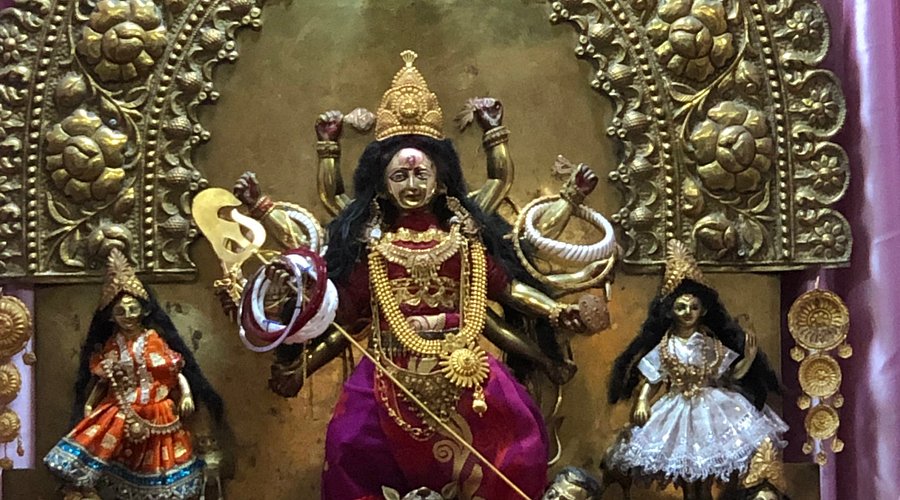
The temple from which a capital was named
The origins of Dhakeshwari Temple recede into a horizon of sacred memory. Tradition and historical record alike attribute its consecration to the 12th-century Sena dynasty king Ballal Sen, who is said to have rediscovered the hidden idol of the Goddess in a forested grove and raised the original sanctum in her honour.
The Goddess herself is the source: Dhaka — the name of Bangladesh's capital — is traditionally believed to derive from Dhakeshwari, "the Goddess of Dhaka." The city, in this telling, is not the temple's address. The temple is the city's origin.
"Where the Goddess dwelt, a city arose. Where the city stood, a nation was born."
The Sacred Sati Peeth
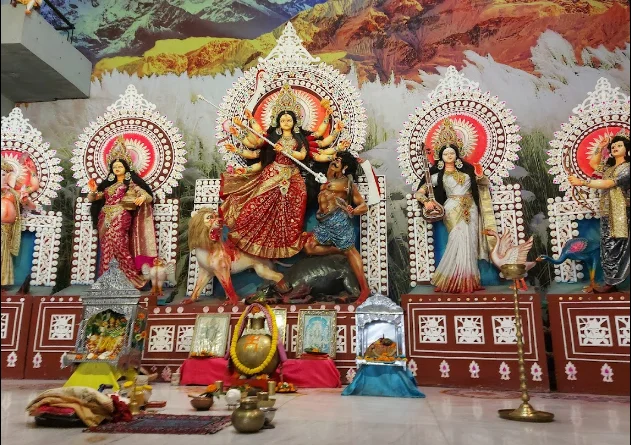
Within the spiritual cosmology of Hinduism, Dhakeshwari is venerated as one of the 51 Shakti Peeths — sites where parts of Goddess Sati's body fell during her divine dissolution. By the most beloved tradition, Dhakeshwari marks where her crown — or by some accounts, her mukut-mani — descended to earth, sanctifying the soil of Bengal forever.
Pilgrims for centuries have walked toward this threshold not merely to view a sanctum, but to stand at a precise meeting-point of the celestial and the earthly — a coordinate of grace plotted in the sacred geography of South Asia.
Some accounts further weave the legend with kings, queens, hidden idols and rediscovery — each layer adding to the temple's mystique without diminishing its central truth: this is a site where divinity has chosen to remain.
Sanctum, Shikhara, and Sacred Geometry
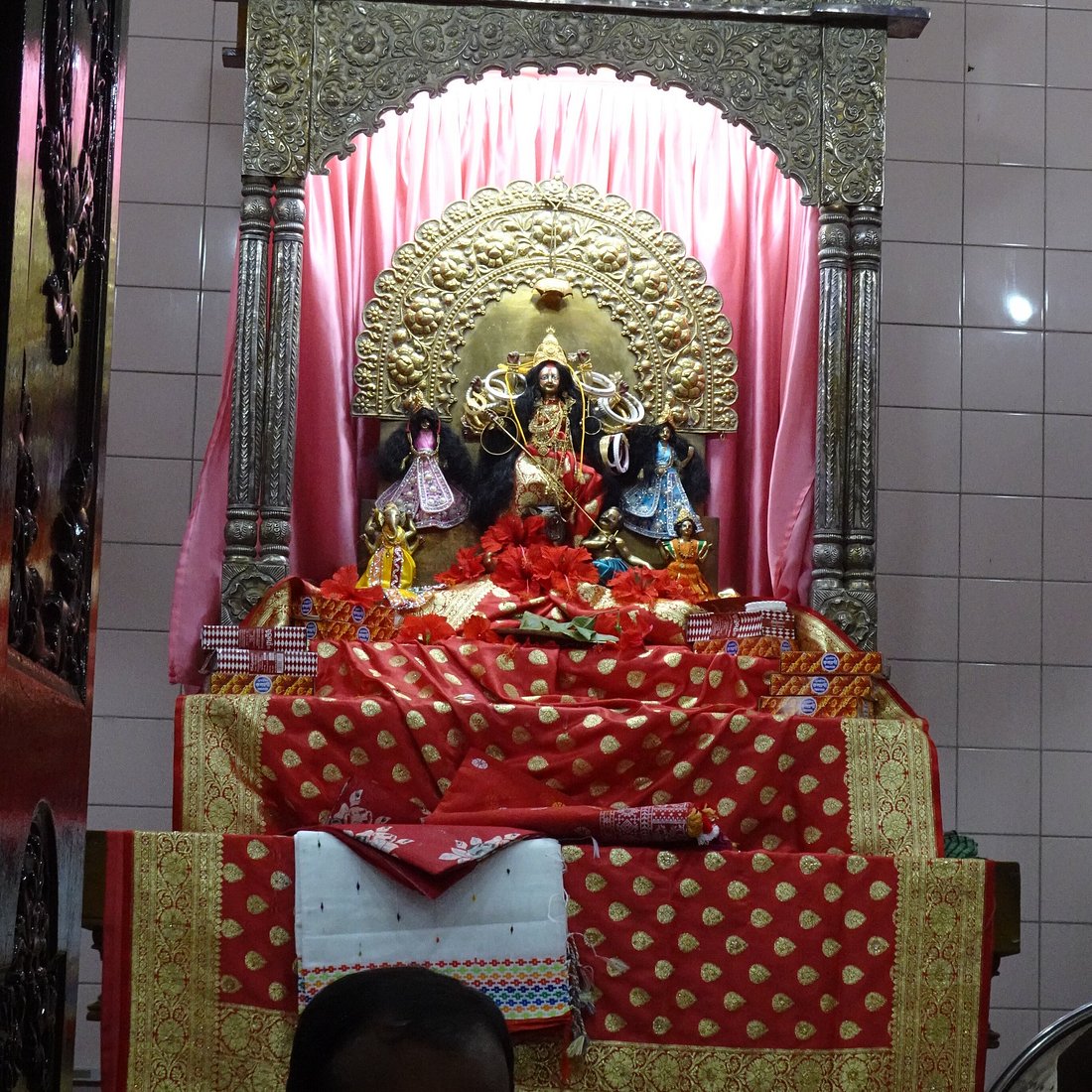
The temple complex is an ensemble of dignified Bengali shikhara towers, elegantly arched verandas, and bell-crowned sanctums laid out in a courtyard plan that opens generously to the sky. Vermillion and ivory dominate the palette — the colours of the Mother — while ornamental carvings recall the high terracotta tradition of medieval Bengal.
At the heart stands the inner sanctum where the Devi's idol is enshrined, attended by ancillary shrines to Shiva, Krishna, and the four miniature Shiva temples that flank the courtyard — collectively known as the Shiva Mandir. Lamps, conch-shells, and the unhurried scent of incense complete the architectural vocabulary.
Restoration efforts over the past century have honoured the original spirit of the structure — preserving its proportions, its courtyards, and the contemplative dignity of the spaces between the buildings.
From sacred site to National Temple
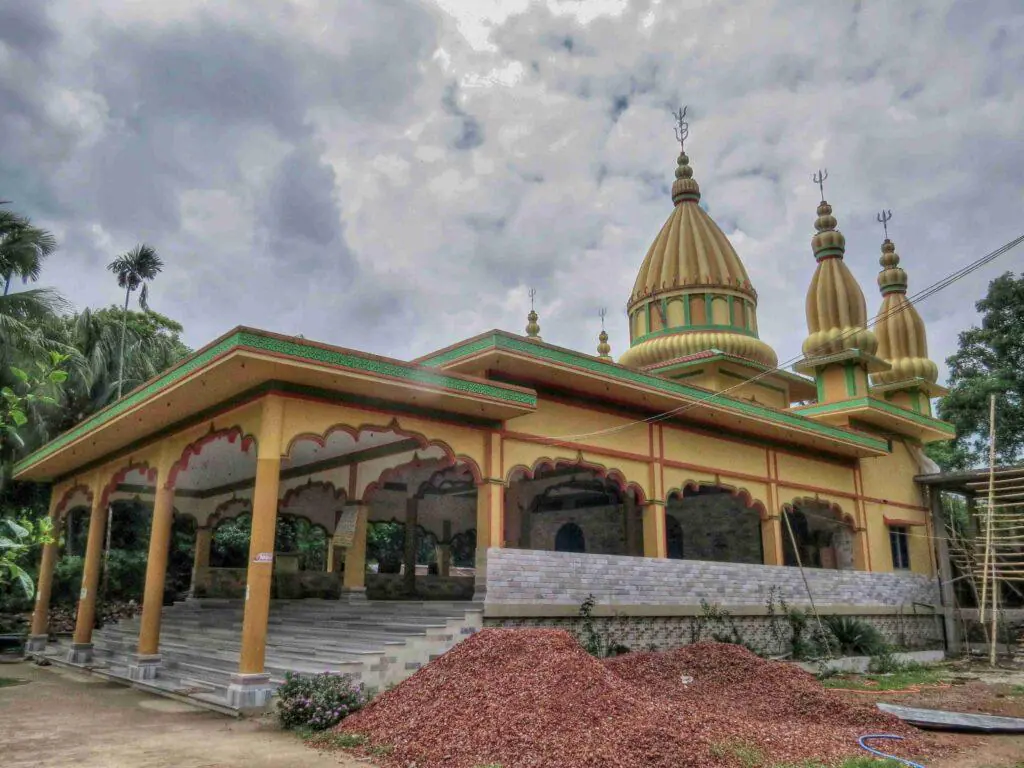
In 1996, the Government of the People's Republic of Bangladesh formally elevated Dhakeshwari to the unprecedented status of National Temple — a recognition without parallel anywhere in the Muslim-majority world. The act was both a tribute to the temple's millennium-deep heritage and a sovereign declaration of pluralism.
Today, the State participates in the temple's principal festivals; Heads of Government and senior officials visit during Durga Puja; and the temple's calendar is entwined with the cultural rhythm of the nation itself.
For Bangladesh's Hindu community — and for every citizen who values plural heritage — Dhakeshwari is not simply a temple. It is the visible signature of national dignity.